Juvenile Justice Reform

Juvenile Community Initiative to Reduce Gun Violence

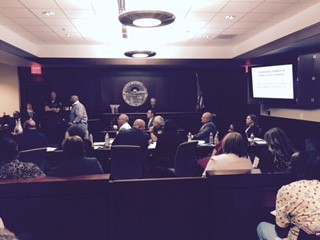
Reduce Gun Violence picThe number of youth falling victim to gun violence is a very serious issue for society. Homicide is the second leading cause of death among 15-24 year olds. The troubling trend of gun violence has lead many communities to work together to address the problem. On May 5, 2015, Montgomery County Juvenile Court Judge Anthony Capizzi hosted the Juvenile Community Initiative to Reduce Gun Violence (JCIRGV) Call-In. Since 2010, Montgomery County Juvenile Court has hosted six Call-In sessions, serving a total of 87 at-risk youth. The youth are identified through Montgomery County Juvenile Court after collaborating with the Dayton Police Department and the Montgomery County Sheriff’s Office. The youth selected are at a high risk to be the victims or the perpetrators of gun violence. They have also been identified as being associated with a gang or organized criminal activity.

The Juvenile Community Initiative to Reduce Gun Violence (JCIRGV) is comprised of the Dayton Police Department, Trotwood Police Department, Montgomery County Sheriff’s Office, F.B.I., A.T.F., U.S. Marshall, U.S. Attorney’s Office, Montgomery County Prosecutor’s Office and Montgomery County Juvenile Court. This multi-jurisdictional, multiagency, mutual effort is intended to quickly and effectively reduce gun violence and associated homicides. JCIRGV is collaborating with state and federal law agencies, social service providers, and the community to present a clear message that gun violence must stop.

Assessing Trauma in Kids Just Got A Little Better; News Roundup

Every week Reclaiming Futures rounds up the latest news on juvenile justice reform, adolescent substance abuse treatment, and teen mental health. 
Assessing Trauma in Kids Just Got A Little Better (Psych Central)
A research team at Case Western Reserve University  proposed and tested a new method to assess trauma in youth. It would be especially relevant for assessment within the juvenile justice system.

Chittenden County Aims to Streamline Screening and Assessment for At-Risk Young People in Vermont

In January we announced that five Reclaiming Futures sites were chosen to implement an innovative adaptation of Screening, Brief Intervention, and Referral to Treatment (SBIRT) for adolescents. Each of the five pilot sites will serve at least 100 youth over the course of three years, targeting youth who show mild to moderate levels of substance use—a population that doesn’t often qualify for or seek treatment, but who are at high risk for developing worse substance abuse problems down the road.

Two of those sites are brand new sites implementing the Reclaiming Futures model for the first time, including Chittenden County, Vermont, bringing the total national cohort of Reclaiming Futures sites to 41.

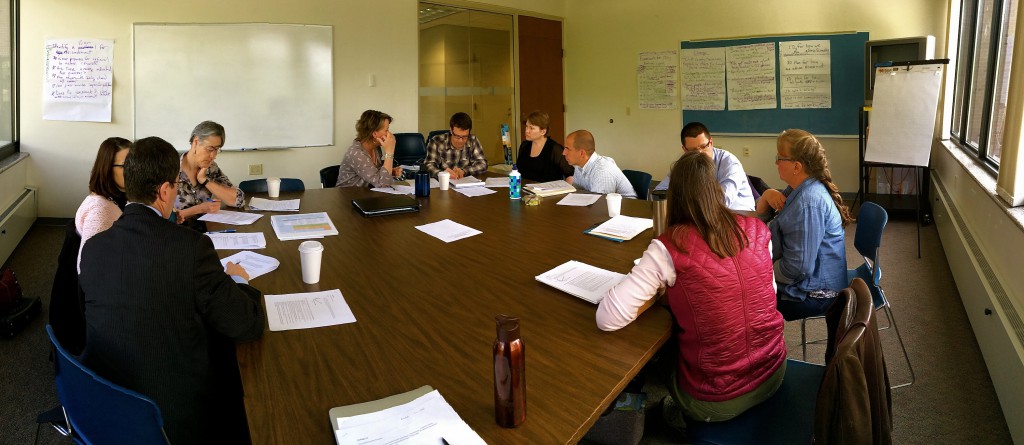
The Chittenden County team convenes to discuss plans for the new site.

As this national collaborative of juvenile justice and mental health experts is growing, we followed up with Jon Kidde, Project Director at Chittenden County, to learn about his team’s vision for helping Vermont’s young people at the front door of the juvenile justice system. Despite all 41 sites being replicated as a Reclaiming Futures model, each state and county face unique challenges to assisting teens. We aim to connect sites to share innovative ideas and creative solutions, and Jon Kidde is the latest to share how the Chittenden County site will adapt and implement the SBIRT process in Vermont.

House Proposal Would Eliminate Key JJDPA Funding; News Roundup

Every week Reclaiming Futures rounds up the latest news on juvenile justice reform, adolescent substance abuse treatment, and teen mental health. 

House Proposal Would Eliminate Key JJDPA Funding (Juvenile Justice Information Exchange)
This past week the House Appropriations Committee, Subcommittee on Commerce, Justice, Sciences & Related Agencies, released their FY'16 Appropriations proposal, causing alarm in the juvenile justice community. Juvenile justice funding that goes to states, under the Juvenile Justice and Delinquency Prevention Act, would be eliminated under the new proposal. For more information you can  check out this JJIE story by Gary Gately,  and also follow National Juvenile Justice Network for updates.

Milwaukee Early Intervention Program Strives to Help Reduce Mass Incarceration

Screen Shot 2015-05-08 at 11.05.58 AMThe New Yorker recently published an article, “The Milwaukee Experiment,” on the criminal justice reform efforts taking place in Milwaukee, Wisconsin, as a result of the continued increase in the prison population. These efforts focus on changing the way the system handles low-level offenders, many of which are young people, and the continued growth of racial disparities in prison.
One of the main players behind the movement is John Chisholm, the District Attorney in Milwaukee County, who has worked to find ways his office can contribute to changing the tide of mass incarceration and racial imbalance in American prisons.

How Curfews Have Changed Through History; News Roundup

Juvenile Justice Reform

  • How Curfews Have Changed Through History (TIME)
    In light of recent events in Baltimore, Lily Rothman, Archive Editor of TIME.com, examines the historical reasons for and effects of curfews, and why emergency curfews should be thought of differently than permanent juvenile curfews

Hardin County Convenes Local Leaders at Annual Stakeholder Meeting

Last week, Hardin County Juvenile Court convened its annual stakeholders meeting, gathering leaders from local businesses, churches and agencies to share progress on Reclaiming Futures’ impact through new data, and insight into the future of the program.

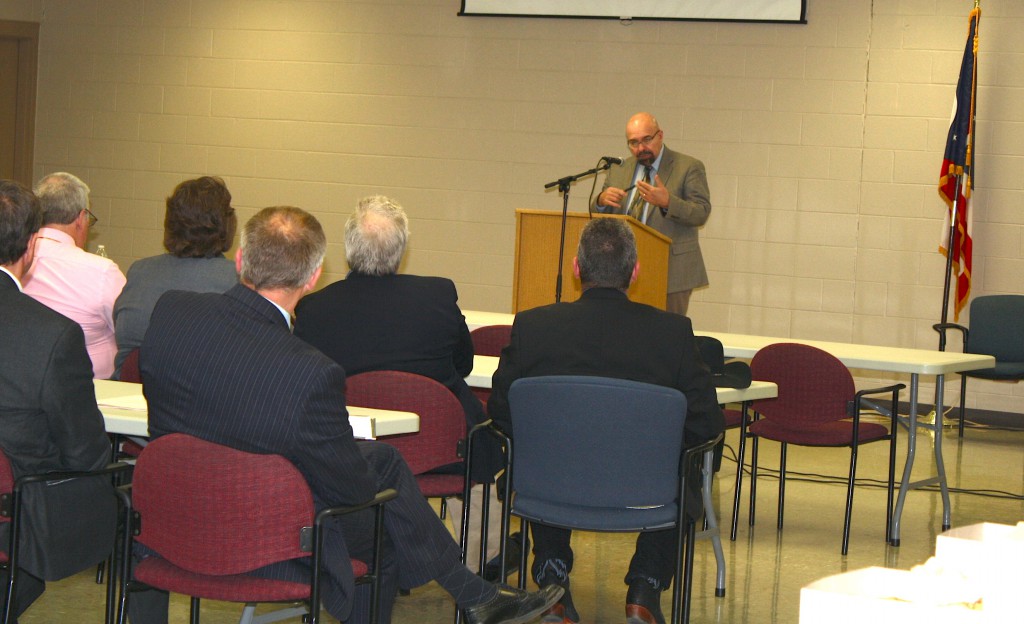
Randy Muck, Senior Advisor of Advocates for Youth and Family Behavioral Health, speaks at the Hardin County Juvenile Court stakeholder meeting

Judge Steven Christopher shared results from Hardin County’s participation in a statewide pilot program to study medically assisted treatment for opiate abuse. He noted positive results. Of the 69 percent of people in his family treatment court, zero percent relapsed or experienced recidivism.

Pew Charitable Trusts Release In-Depth Look at Poor Outcomes and High Price of Incarcerating Juveniles

249326_262741703751645_3185263_nA recently released report from Pew Charitable Trusts has emphasized the need for change in the juvenile justice system as it reveals that many current practices are high cost with poor outcomes.
The report highlights the growing body of research indicating that “lengthy out-of-home placements in secure corrections or other residential facilities fail to produce better outcomes than alternative sanctions” for many juvenile offenders.

NCJFCJ Releases Guide to Trauma Consultation in Juvenile and Family Courts

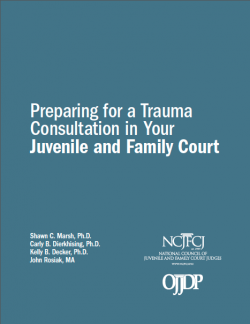
A growing body of research is constantly giving fuel to the issue of childhood trauma and toxic NCJFCJ Trauma Manual Coverstress—specifically, how they impact health outcomes in the future, and the critical need for juvenile and family courts to become trauma-informed in order to effectively treat these issues. The latest effort to make trauma-informed courts widespread is from the National Council of Juvenile and Family Court Judges (NCJFCJ), which has released “Preparing for a Trauma Consultation in Your Juvenile and Family Court,” a guide for juvenile and family courts to become more trauma-informed.

The guide outlines why courts need to be trauma-informed and how they approach building a framework, including:

  • Elements of a comprehensive and successful trauma-informed framework
  • Questions to ask to determine if your juvenile or family court is ready for a trauma consultation
  • How to prepare for a consultation
  • What to expect during a consultation
  • How to put consultation recommendations into action

ACEs Too High, an online news site dedicated to adverse childhood experiences (ACEs), regularly reports on the need for more trauma-informed courts that are reflected in this NCJFCJ guide. A recent article by writer Ed Finkel reports on local courts who are adopting models of trauma-informed care, and other tools available, such as the Think Trauma curriculum for staff members in juvenile correctional facilities.

Finkel also reported on the trauma-informed approach used by judges to administer sustainable solutions for at-risk youth. The article interviews several judges to gain their perspective on trauma-informed courts.

Most recently, Pediatrician and ACEs leader Nadine Burke Harris brought ACEs to the forefront once again on a national stage during her TEDMED talk emphasizing the health impact of childhood trauma, indicating that those who have experienced high levels of this kind of toxic stress are four times more likely to become depressed, and 12 times more likely to attempt suicide.

The NCJFCJ guide is more timely than ever, as more and more public health leaders are adding to existing evidence that emphasizes the need for trauma-informed care. A trauma-informed court can be a safe and effective point of intervention to vulnerable youth and families, and can help coordinate support or treatment to improve outcomes and get young people on a positive path.

Pages