
Juvenile Justice Reform

3 Reasons to Take Our Survey

Help us continue to improve our work by filling out our new positioning survey!We need your help
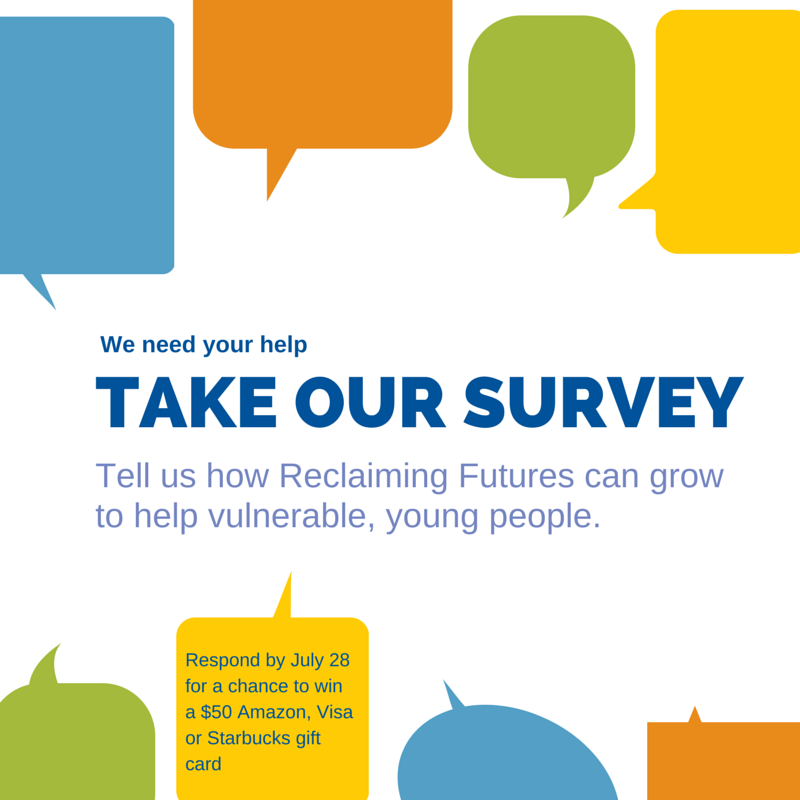
As Reclaiming Futures heads into its 15th year of service, we’re seeking your help to identify new opportunities to grow this initiative and better serve vulnerable, young populations. We hope you’ll contribute your input in our new survey to help us understand where Reclaiming Futures is doing well, and where we can get better.

Click here to start the survey.

The 16-question survey should take approximately 10 minutes to complete. At the end of the survey, you'll have the opportunity to be entered to win a $50 Amazon, Visa or Starbucks gift card (winner's choice).

Casey: Time to Close ‘Youth Prisons’; News Roundup

Every week Reclaiming Futures rounds up the latest news on juvenile justice reform, adolescent substance abuse treatment, and teen mental health. 
Casey: Time to Close ‘Youth Prisons’ (Juvenile Justice Information Exchange)
The Annie E. Casey Foundation has called for an end to state juvenile correctional centers, which the foundation refers to as "youth prisons." This call to action is fueled by their recent report which finds that despite increased attention to the conditions of juvenile corrections institutions, incarcerated youth continue to be subjected to abusive, systematic maltreatment.

The Sexual Abuse to Prison Pipeline: New Report Calls for Better Treatment for Girls

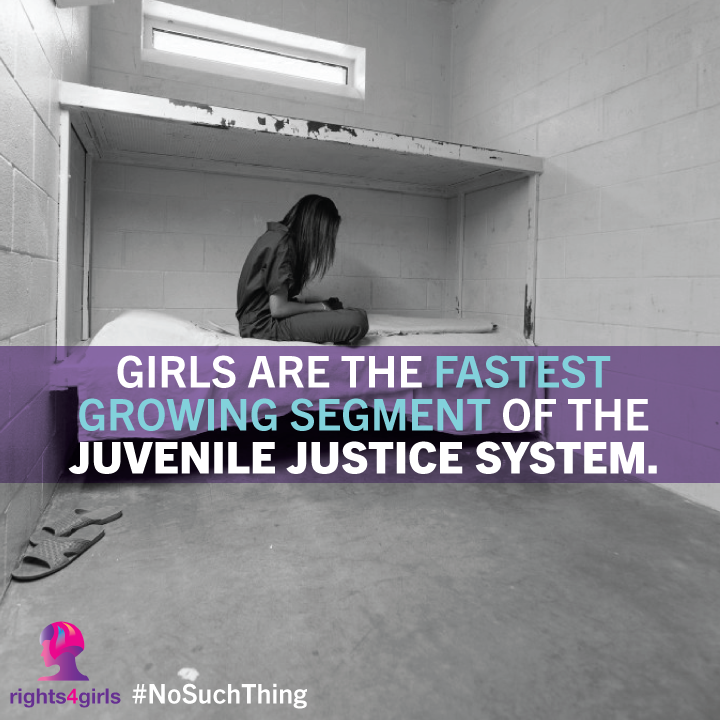
The findings are staggering, if not disturbing.r4g_meme_m4

  • 31 percent of girls in the juvenile justice system had been sexually abused, four times higher than the rate of boys.
  • 45 percent of girls in the system have an adverse childhood experiences (ACEs) of five or more, placing them at a much higher risk for chronic health issues.

A new report out by Rights4Girls, in conjunction with the Ms. Foundation for Women and the Georgetown Law Center on Poverty & Inequality, reveals how the “Sexual Abuse to Prison Pipeline” strikes girls especially hard. It concludes that there is a direct cause-and-effect connection between the sexual abuse of girls at a young age and their involvement in the juvenile justice system.

History of Abuse Seen in Many Girls in Juvenile System; News Roundup

Every week Reclaiming Futures rounds up the latest news on juvenile justice reform, adolescent substance abuse treatment, and teen mental health. 
History of Abuse Seen in Many Girls in Juvenile System (The New York Times)
A report released on Thursday - a rare examination of girls in the juvenile justice system - finds that as many as 80 percent of girls in state systems have a history of sexual or physical abuse, and that sexual abuse is among the primary predictors of girls’ involvement with systems.  The report also finds that systems lack resources to identity or treat these common issues, and suggests ways to approach needed reform.

Apply Now for the 2015 Multi-System Integration Certificate Program

Now through August 21, 2015, The Center for Juvenile Justice Reform (CJJR) at Georgetown University‘s McCourt School of Public Policy is accepting applications for its 2015 Multi-System Integration Certificate Program.

The program is designed to support local jurisdictions’ efforts to improve outcomes for youth who have been involved in both the child welfare and juvenile justice systems (also known as “crossover youth”) by implementing integrated, multi-disciplinary solutions.

Maltreatment of Incarcerated Youth Still a Problem, Report Finds; News Roundup

Every week Reclaiming Futures rounds up the latest news on juvenile justice reform, adolescent substance abuse treatment, and teen mental health. 

Maltreatment of Incarcerated Youth Still a Problem, Report Finds (Philanthropy News Digest)
A report from the Annie E. Casey Foundation finds that, despite increased attention to the detrimental conditions of juvenile corrections institutions, incarcerated youth continue to be subjected to abusive, systematic maltreatment.

State Supreme Court Ruling Seals Juvenile Records; News Roundup

Every week Reclaiming Futures rounds up the latest news on juvenile justice reform, adolescent substance abuse treatment, and teen mental health. 

Clinical Conversations about Cannabis: Using Elicit-Provide-Elicit (ATTC Network)
Given the current climate of conflicting messages and changing policy related to marijuana, counselors need both sources of reliable information and effective strategies to guide their interventions as they talk with clients about this controversial subject. The purpose of this article is to describe how Motivational Interviewing (MI) strategies can inform clinical conversations about cannabis use, with a focus on the Elicit – Provide – Elicit (EPE) model as one potentially useful tool.

Save the Date: Leadership Institute Live-streaming on June 23rd

blog pic for live-streamWe look forward to bringing the Reclaiming Futures community together next week for our annual Leadership Institute! The annual conference provides the opportunity for juvenile justice and adolescent mental health and substance use treatment colleagues to engage in a robust discussion of critical topics, as well as an opportunity for participants to help one another successfully adopt, implement and sustain Reclaiming Futures at the local level.

2015 Leadership Institute will be held on June 23-24 in La Jolla, California, and this year's theme is: “Public Health and Justice: A Partnership to Promote Equity and Well-Being for Youth and Families."

Can't make it to Leadership Institute this year? On Tuesday, June 23rd three Leadership Institute plenary sessions will be live-streaming on reclaimingfutures.org and on jjie.org:

Opportunity Board Roundup: Juvenile Justice Grants, Jobs, Webinars and Events

opportunityBelow you’ll find a selection of the latest grants, jobs, webinars and events posted to our Opportunity Board. Please share the Reclaiming Futures Opportunity Board with your colleagues in the juvenile justice, adolescent substance abuse and teen mental health areas. We encourage you to browse and post!

Preventing Children with Disabilities from Entering the Juvenile Justice System

ndrnApproximately 65 - 70 percent of young people in the justice system meet the criteria for a disability. During time in the system, many children are deprived of the services they need for healthy growth, education, and development—something that negatively impacts children with disabilities more seriously than others.

The National Disability Rights Network (NDRN) released a report this month with recommendations on preventing disproportionate placement and inadequate treatment of children with disabilities in the system: “Orphanages, Training Schools, Reform Schools and Now This?”

Pages