Juvenile Justice Reform

Study Demonstrates that Summer Jobs Reduce Violent Crime Among Teens

onesummerA recent study from the University of Chicago Crime Lab revealed that summer jobs programs for high school students from disadvantaged neighborhoods have a significant impact on reducing crime among teens.

The study focused on Chicago’s One Summer Plus program, which offers eight weeks of part-time summer employment to young people and an adult job mentor to help manage barriers to employment.

The study included 1,634 teens from 13 high-violence high schools who were almost all C students and eligible for free or reduced-price lunch. Twenty percent of the group had already been arrested, and 20 percent had already been victims of crime.

Compared the control group, this group experienced a 43 percent reduction in violent-crime arrests over 16 months, emphasizing the importance of pro-social activities for young people—something Reclaiming Futures believes is key to success.

A Washington Post article covering the study discussed why the results are so important: “That number is striking for a couple of reasons: It implies that a relatively short (and inexpensive) intervention like an eight-week summer jobs program can have a lasting effect on teenage behavior. And it lends empirical support to a popular refrain by advocates: ‘Nothing stops a bullet like a job.’”

Researcher Sara Heller, who conducted a randomized control trial with the program, said of the outcomes:

“The results echo a common conclusion in education and health research: that public programs might do more with less by shifting from remediation to prevention. The findings make clear that such programs need not be hugely costly to improve outcomes for disadvantaged youth; well-targeted, low-cost employment policies can make a substantial difference, even for a problem as destructive and complex as youth violence.”

The decline occurred mainly after the eight-week program ended, demonstrating that the summer of employment did more than keep the teens busy—it changed their behavior after the job, as well.

For our past reporting on the impact of pro-social activities, visit:

Addressing Youth Crime by Teaching Social Skills through Sports

Stop Bullying by Promoting Pro-Social Skills on the Playground

Image from One Summer Chicago website

New Funding Opportunity to Help Eliminate Solitary Confinement

veraVera Institute of Justice has issued a request for proposal (RFP) for corrections departments in search of safe alternatives to segregation, also referred to as solitary confinement.

Solitary confinement is a controversial and often debated topic in the realm of juvenile justice as teens that are segregated often experience mental health and behavioral problems—as well as a higher rate of recidivism upon release.

In the spotlight this year regarding its practices of solitary confinement was Rikers Island. Conditions at Rikers have been described as “horrific” and were condemned by the U.S. Attorney for the Southern District of New York this August, who stated that the use of solitary confinement for youths was “excessive and inappropriate.”

There is growing nation-wide support to eliminate solitary confinement entirely as evidence suggests it is an expensive and counterproductive policy for facilities and public safety.

Vera Institute of Justice, in partnership with the U.S. Department of Justice, is now offering five state or local corrections systems a chance to explore and implement an alternative to solitary confinement as part of its new Safe Alternatives to Segregation (SAS) Initiative.

The goals of the initiative include the following:

  • Assist states and counties in reducing their use of segregation;
  • Develop, demonstrate, and evaluate alternatives to disciplinary, administrative, and protective custody segregation;
  • Raise awareness across all correctional institutions nationwide—prisons and jails—of alternatives to segregation;
  • Conduct evaluations and impact studies and make their findings known across the corrections field; and
  • Produce practitioner-focused guides to implementing alternative practices.

The SAS initiative expands on Vera’s Segregation Reduction Project, which has worked with corrections departments since 2010 in states including Washington, New Mexico, and Pennsylvania to reduce reliance on segregation.

Applications will be accepted through Jan. 30, 2015. To learn more about the SAS initiative, including the full RFP and guidelines to submitting an application, visit Vera’s website.

Honoring the Achievements of Dr. H. Westley Clark

Dr Wesley ClarkWe’re pleased to honor the achievements of Dr. H. Westley Clark in light of his recent retirement including his incredible impact on substance abuse treatment and commitment to the success of our young people.
The Substance Abuse and Mental Health Service Administration recognizes the strides Dr. H. Westley Clark made during his 16 years as the Director of the Center for Substance Abuse Treatment (CSAT), and more than 30 years in the federal government:

Wes’ professional life is one marked by non-stop accomplishments and accolades (such as the AMA’s John P. McGovern Award, Presidential Rank Award, Vernelle Fox Award from the California Society of Addiction Medicine, Solomon Carter Fuller Award from the American Psychiatric Association, and multiple Awards for Distinguished Service from the HHS Secretary). His long and distinguished career has had significant impacts on the research, practice, policies and programs in the treatment of substance use disorders. Wes is a graduate of the chemistry program at Detroit’s Wayne State University, the University of Michigan schools of medicine and public health, and Harvard law school. He also completed a two-year Substance Abuse Fellowship at the Department of Veteran Affairs Medical Center in San Francisco, where he served as Associate Clinical Professor, Department of Psychiatry, University of California at San Francisco (UCSF). He also served as senior program consultant to the Robert Wood Johnson Substance Abuse Policy Program and supported a number of National Institute of Drug Abuse-funded research grants.

Reclaiming Futures is happy to have worked parallel to Dr. H. Westley Clark and support his work in substance abuse treatment. We have admired his leadership in the recovery movement and commitment to increasing access to treatment services. In 2007 and 2009, Dr. Clark secured Reclaiming Futures funding from the Center for Substance Abuse Treatment (CSAT), along with OJJDP, to help us support sites implementing our model. He will be recognized for his lasting accomplishments, and we will continue to look toward his work for solutions and inspiration.

Image from SAMHSA website

Juvenile Court Records: Is a Lack of Protection Harming Teens’ Future Success?

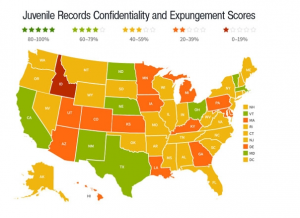
juvenilerecordsThe Juvenile Law Center, a public interest law firm in Philadelphia, issued a “report card” this week demonstrating that the records of juvenile offenders are more easily available to the public than they should be, creating obstacles to future success for many teens.

Juvenile records contain details about a child’s family, social history, mental health history, substance abuse history, education, and involvement with the law. According to the Juvenile Law Center’s new national scorecard, the majority of states lack the protections necessary to keep this information confidential. Instead, many states allow these records to be accessed by the media, employers, government agencies and victims, which can create future barriers to housing, education and employment for teen offenders.

Failed Policies, Forfeited Futures: A Nationwide Scorecard on Juvenile Records is the first comprehensive evaluation of state policies that govern the confidentiality and expungement of juvenile court records. No state earned the maximum five-star rating, and the national average was three out of the possible five stars.

These records often remain open to allow courts, correction officials and juvenile agencies to plan a course of treatment and rehabilitation; however, few states have systems that prohibit the public from accessing these records later on.

“There is a misperception that juvenile records are confidential and automatically destroyed when a youth is no longer under court supervision,” said Riya Saha Shah, an attorney at the Juvenile Law Center and architect of the study. “Permanent open records are like a ball and chain that prevent young people from becoming productive adults.”

Of the many teens arrested in the U.S. each year, 95 percent are for nonviolent offenses, meaning these young people were never a threat to public safety and often do not have further trouble with the law. Yet, these nonviolent records can negatively impact the rest of their adult life when viewed by potential employers, landlords or college admissions offices.

To prevent these negative impacts, the Juvenile Law Center has 10 recommendations to help keep juvenile records from affecting teens’ adult life:

  • Records should not be widely available online.
  • Records should be sealed to the public before they are expunged.
  • Records should be automatically sealed and expunged.
  • Expungement should include physical destruction and electronic deletion.
  • Expungement eligibility should begin once a case is closed.
  • All offenses should be eligible for expungement.
  • One entity should be designated to inform youth about the expungement.
  • Forms for expungement should be youth-friendly.
  • Filing for expungement should be free.
  • There should be sanctions for failure to comply.

The Juvenile Law Center also encouraged policymakers, states, attorneys, and court personnel to review juvenile record laws and protections and look for ways to improve them.

Register for Part II in this Webinar Series: Family Involvement in Juvenile Justice

Last week, I highlighted the value of family and mentor involvement in a teen’s life, particularlymentalhealth teens who have been involved in the juvenile justice system. This week and next, the National Center for Mental Health and Juvenile Justice and the Mental Health and Juvenile Justice Collaborative for Change are building on that topic with a webinar series dedicated to family involvement in juvenile justice.

The first part, “Working with Families,” occurred this week and introduced strategies for teens and families to address behavioral health needs together, and how to integrate family engagement in a strategic and productive way.

The second of the series, “Navigating the Juvenile Justice System,” will be presented December 4 from 2-3 p.m. ET. This follow-up webinar will focus on facilitating understanding for families—engaging families by sharing insight about the system and ensuring they know how to access available services.

Details
Family involvement is critical for youth with behavioral health disorders who are involved with the juvenile justice system. Families need information, training, and support to help them become knowledgeable about the juvenile justice system and effective advocates for their children. At the same time, juvenile justice systems need to ensure that their policies and procedures support family involvement and that staff are trained to better understand the family perspective, the benefits of family involvement, and specific strategies for family engagement.

Webinar: Navigating the Juvenile Justice System
When: December 4 from 2-3 p.m. ET
Presenters: Sarah Cusworth-Walker, Ph.D., Assistant Professor at the Division of Public Behavioral Health and Justice Policy at the University of Washington; Mathilda de Dios, Program Manager at the Northwestern Children and Family Justice Center in Chicago, Illinois
Register here

Reclaiming Futures in the Sea of Juvenile Justice Reform Initiatives

In the national scope of evidence-supported juvenile justice “reforms”, a question is often posed as to which approach or model makes the most sense to potential adopters. Or said another way, can we avoid “model fatigue” by adopting one reform methodology that gets us the best results with the most cost effective strategies?

Understanding the Impact of Trauma on Juvenile Justice: New Tool to Support Efforts

Due to the connection between ACEs (adverse childhood experiences) and juvenile justice system involvement, it has become increasingly important that the system become more trauma-informed in its processes.

The term ACEs refers to childhood abuse, neglect, and general household dysfunction that negatively affects a child’s development. To improve the treatment of young people impacted by ACEs in the juvenile justice system, there is an ongoing effort to increase knowledge of trauma-informed care and how it can improve systems in health, justice and education.

Communities like ACEs Connection, which work to prevent Adverse Childhood Experiences (ACEs) and to change systems to stop traumatizing already traumatized people, are already paving the way to combat this problem in the future.

The latest resource to support these efforts is a new tool created by JBS International and Georgetown University National Technical Assistance Center for Children’s Mental Health. These two organizations came together to build a free online tool called “Trauma Informed Care: Perspectives and Resources” that provides insights and resources for those who want to be more trauma-informed.

The tool includes the following to allow users to take advantage of existing research, knowledge, practices, and approaches that have already shown to be effective in addressing trauma:

  • Video interviews of national, state, tribal, and local leaders in many child-serving systems; developers of evidence-based treatments and practices; physicians; researchers; administrators of provider organizations; clinicians; youth and young adults; families; and advocates who share lessons learned and identify remaining gaps.
  • Issue briefs that provide an introduction and overview for each of the tool’s eight modules.
  • Comprehensive resource lists to support users in understanding how to build trauma-informed systems and organizations.

Explore the eight modules of the tool on the site, which is now live!

For past reporting on ACEs in the juvenile justice system, see the following:

Family Engagement in the Juvenile Justice System: Still a Long Way to Go

The role of family and mentors in any teen’s life contributes to their success and healthy Reclaiming Futures Programfuture. The role of family and mentors for teens in the juvenile justice system or a juvenile correctional facility is even more critical.

Family engagement in the juvenile justice system is not a new concept, but it is a key component to ensuring at-risk teens stay clear of substance abuse and crime. A recent Juvenile Justice Information Exchange article addresses this need in youth detention centers:

“Experts, supported by a small but growing body of research, say fostering family engagement improves incarcerated youths’ behavior, helps families feel more connected, reduces disciplinary incidents and boosts the staff morale.”

“Moreover, strengthening these connections better prepares youths for a return to the community upon release — most return to their family homes — and reduces repeat offenses.”

While the author Gary Gately does identify some successful programs where family involvement and treatment are front and center, he shares that most systems nationally are more focused on punishment, and oftentimes there exists a contentious relationship between family members and juvenile facility staff members.

Reclaiming Futures’ sites work with a wide variety of community members and resources to contribute to youth success as they remain in their community. Led by the community fellow(s), sites link youth to mentors, education, employment, job training, hobbies, sports, volunteer opportunities, faith communities, and other prosocial activities of interest to youth.

As we’ve seen among Reclaiming Futures sites who have achieved success with this strategy, family involvement and mentors should be closely integrated into a teen’s life for optimal results. For example, Reclaiming Futures in Santa Cruz is taking preventative action with a partnership with Hands on Fatherhood, encouraging fathers and father-figures to create meaningful relationships with their kids. Also, Reclaiming Futures in Snohomish County saw success with its Promising Arts in Recovery program, which added a mentorship and creative arts component to treatment, resulting in substance-free teens who become productive members of their communities.

Gately shares some wonderful examples of successful family integration efforts around the country. Those, paired with Reclaiming Futures’ efforts to connect teens with support systems during and after exiting the juvenile justice system, are pioneering the way to a deeper systemic impact that can hopefully lead to communities and facilities committed to full family and community engagement.

Examining the Keys to Success for Connecticut’s Juvenile Justice System

keysIn 2002, Connecticut’s contracted rehabilitation programs for juvenile offenders were discontinued, as they were not producing the results necessary to justify their costs.

The lack of the programs’ success was brought to light when a study by the Connecticut Policy and Economic Council, which assessed the return on taxpayer dollars from juvenile justice programs, revealed that recidivism rates among juveniles in the contracted programs were significantly higher than that of a matched sample with no programming. The funding for these programs was cut and reinvested elsewhere.

However, Connecticut has made a complete turnaround in recent years with a 40 percent decrease in arrests, calling for an examination of how they’ve made such staggering improvements.

A recent article in the Juvenile Justice Information Exchange emphasized the following as significant developments that have gotten the state this far:

  • Connecticut changed the policy that processed 16- and 17-year-olds through adult court. Now they fall within the jurisdiction of the juvenile court system. While this “Raise the Age” reform was expected to double juvenile court intake, intakes are actually lower.
  • Connecticut invested in juvenile probation officers and boasts some of the lowest officer/client ratios in the country. Officers are also afforded tremendous training in motivational interviewing, family engagement, adolescent development and more.
  • A Connecticut-specific risk/needs assessment instrument was created, normed and validated, and is regularly updated and refined, as is the process the assessment tool is used with.
  • An automated case plan helps focus officers and clients alike on specific goals and ensures appropriate treatment.
  • Data systems were developed to carefully monitor outcomes.
  • Connecticut, in subscribing to the Result-Based Accountability tenets, asks and answers quantitatively on a quarterly basis: How much is being done, how well is it being done and is anyone better off?

Note: Read the full article on JJIE for further details on Connecticut’s past and future plans to continue improving its juvenile justice system.

Examining Blame and The Power of Forgiveness Within the Justice System

A recent podcast on Radiolab, “Blame,” examines the question of accountability that often surrounds criminal justice and mental health. Listen in for two enticing stories filled with observations on self-identity, the impact of guilt, and the power of forgiveness.

The episode also includes a discussion on how the legal system could be improved—including an argument that when sentencing, we should forget about blame altogether and focus on the probability of future recidivism instead.

Pages