Blog: Reclaiming Futures - 2014

El Paso Teens Build Thanksgiving Float that Earns Community Recognition

More than 250,000 people watched and cheered from the sidelines at the annual Thanksgivingangrybirds Sun Bowl Parade in El Paso, Texas, where more than 100 “gaming mania” themed parade floats, marching bands, giant helium balloons, equestrian units and more glided down the street. Among them, the Challenge Explorers Float, whose Angry Birds themed float took home the Governor’s Award for Best Presentation of the Parade’s Theme.

The teens who constructed the Challenge Explorers Float from the ground up are part of El Paso County’s Challenge Academy, a residential Reclaiming Futures program that is part of its continuum of care and an extension of El Paso’s pro-social activities for youth. These young men and women have been through the juvenile justice system, and oftentimes do community service as part of the Academy’s activities. Building a parade float—from concept development to construction to walking in the parade—offered participants the opportunity to get involved in their local community, and collaborate with staff and family.

“Oftentimes these kids have been outcasts most of their lives, and don’t know what it’s like to be a part of something bigger and be successful at it. To start a project from nothing, come together as a unit and produce a product that wins awards is instrumental in building self-confidence,” says Director of the Challenge Academy, Sam Heredia.

angrybirds2

El Paso’s Juvenile Probation Department was extremely involved and committed to fundraising, coordinating activities throughout the year like selling popcorn, candy gram sales and ice cream float gatherings to raise money for materials and construction. Families of the teens also got involved as part of the Academy’s family reintegration program, donating supplies and working alongside them to build the award-winning float. The collaborated effort meant that not a dime of taxpayer or county money was spent.

Roger Martinez, Chief Juvenile Probation Officer, explains: “This initiative is an example of our response to the A&E show Beyond Scared Straight. We’re learning more and more through programs like the El Paso County Challenge Academy that positive reinforcement actually has a longer lasting impact. In this case, these teens were acknowledged in a positive way by their community, which has the potential to change their mindsets and lead them to become active community members once more.”

Since its inception in 2008, El Paso County Juvenile Justice Center has embraced Reclaiming Futures’ systems change approach through community collaborations and partnerships, which have served juvenile justice youth and families through continued services beyond treatment. These collaborations have expanded to include collaboration with the local FBI Office, Homeland Security and the Sheriff’s Department, in which members of these agencies volunteer their time to act as mentors to youth in the El Paso County Drug Court Program. Members also volunteer their own time to accompany juvenile justice youth to a local gym to teach alternatives to substance use and promote healthier drug free lifestyles.

Tapping into the creative side of juvenile justice involved youth, El Paso County partners with local artists and businesses for contributions, incorporating art into to the educational curriculum utilized by Delta Academy (El Paso Independent School District) or as a catalyst for these youth to express themselves without the need to engage in substance use.

El Paso County is a great example of strong community collaborations and systems change. We are proud to share their accomplishments and look forward to seeing what they strive for next.

Two Reclaiming Futures Sites Come Together to Celebrate Natural Helpers

.

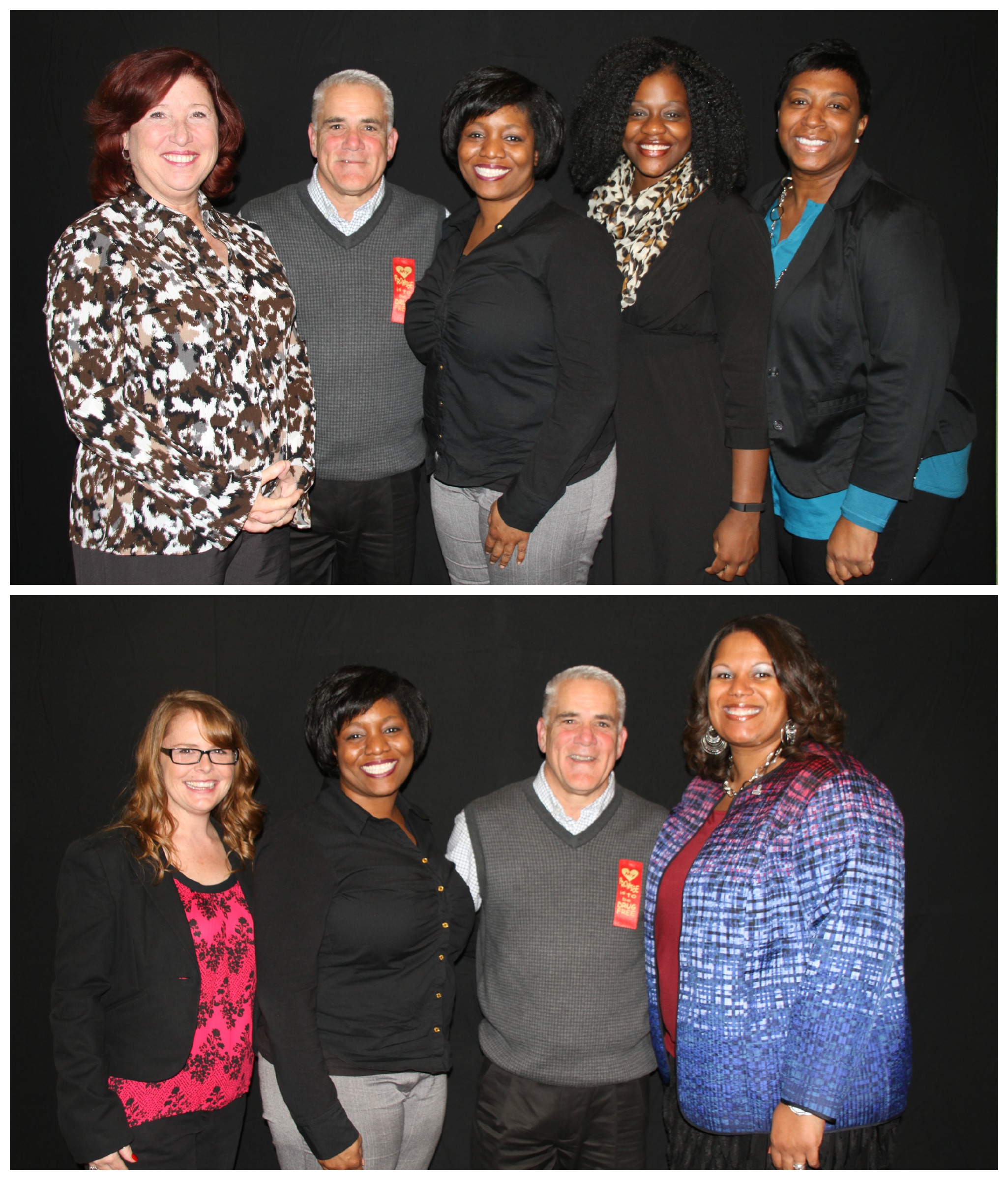
A few members of the Lucas County Reclaiming Futures team attended the 11th Natural Helper Recognition Program in Montgomery County, Ohio, last month. The Recognition Program was held at the Presidential Banquet Center and highlighted volunteers in Montgomery County who are working with the court to help teens overcome drugs, alcohol and crime. It was very beneficial for our Lucas County team to see and hear the testimonials of how the Montgomery County team has engaged the faith-based community, as well as other volunteers in the community, by recruiting and training them to become Natural Helpers. The recognition acknowledged that it takes a village, meaning everyone—the court and community—to work towards the common goal of supporting youth to make positive changes.

The keynote speaker, LaShea Smith, spoke powerfully about how Natural Helpers fit into the Reclaiming Futures mantra of “More Treatment, Better Treatment, and Beyond Treatment.” She spoke to how Natural Helpers in the community learn to recognize that there is an “opportunity in every obstacle”.

I joined the Juvenile Justice Fellow, Mike Brennan, the Juvenile Treatment Court Case Manager, Andrea Hill, the Parent Partner, Victoria Kamm, and the Lucas County Youth Advocate Program Director, Sherri Munn, in a trip from Lucas County to Montgomery County to both support the Reclaiming Futures programming and to learn how Lucas County can better engage their local faith based community, as well as others to provide mentoring services to court involved youth.

The Honorable Nick Kuntz and the Honorable Anthony Capizzi, Montgomery County Juvenile Court, and the Montgomery County Reclaiming Futures team did an outstanding job with putting together the Recognition Program, welcoming our Lucas County team, and promoting fellowship with other attendees. There were more than 200 people in attendance. We look forward to visiting other Reclaiming Futures sites in the future.


Reclaiming Futures in the Sea of Juvenile Justice Reform Initiatives

In the national scope of evidence-supported juvenile justice “reforms”, a question is often posed as to which approach or model makes the most sense to potential adopters. Or said another way, can we avoid “model fatigue” by adopting one reform methodology that gets us the best results with the most cost effective strategies?

Family Engagement in the Juvenile Justice System: Still a Long Way to Go

The role of family and mentors in any teen’s life contributes to their success and healthy Reclaiming Futures Programfuture. The role of family and mentors for teens in the juvenile justice system or a juvenile correctional facility is even more critical.

Family engagement in the juvenile justice system is not a new concept, but it is a key component to ensuring at-risk teens stay clear of substance abuse and crime. A recent Juvenile Justice Information Exchange article addresses this need in youth detention centers:

“Experts, supported by a small but growing body of research, say fostering family engagement improves incarcerated youths’ behavior, helps families feel more connected, reduces disciplinary incidents and boosts the staff morale.”

“Moreover, strengthening these connections better prepares youths for a return to the community upon release — most return to their family homes — and reduces repeat offenses.”

While the author Gary Gately does identify some successful programs where family involvement and treatment are front and center, he shares that most systems nationally are more focused on punishment, and oftentimes there exists a contentious relationship between family members and juvenile facility staff members.

Reclaiming Futures’ sites work with a wide variety of community members and resources to contribute to youth success as they remain in their community. Led by the community fellow(s), sites link youth to mentors, education, employment, job training, hobbies, sports, volunteer opportunities, faith communities, and other prosocial activities of interest to youth.

As we’ve seen among Reclaiming Futures sites who have achieved success with this strategy, family involvement and mentors should be closely integrated into a teen’s life for optimal results. For example, Reclaiming Futures in Santa Cruz is taking preventative action with a partnership with Hands on Fatherhood, encouraging fathers and father-figures to create meaningful relationships with their kids. Also, Reclaiming Futures in Snohomish County saw success with its Promising Arts in Recovery program, which added a mentorship and creative arts component to treatment, resulting in substance-free teens who become productive members of their communities.

Gately shares some wonderful examples of successful family integration efforts around the country. Those, paired with Reclaiming Futures’ efforts to connect teens with support systems during and after exiting the juvenile justice system, are pioneering the way to a deeper systemic impact that can hopefully lead to communities and facilities committed to full family and community engagement.

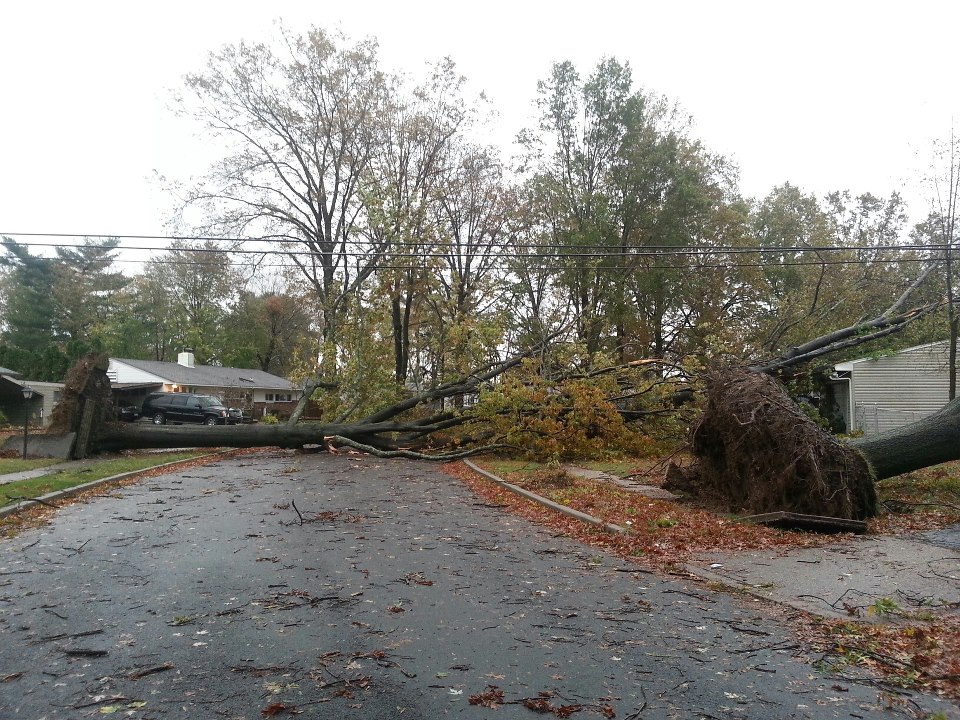
Disaster Mental Health Treatment: Looking Back at Hurricane Sandy

 Flickr user sikeri

Two years ago Hurricane Sandy struck the northeastern coast of the U.S., killing dozens, destroying thousands of homes and affecting the mental health of individuals and communities as a result.

New York State Office of Mental Health (OMH) received a grant from the Federal Emergency Management Agency to deliver counseling services to those affected, but as OMH Medical Director Lloyd I. Sederer addresses, were these services enough?

Sederer explains in his Huffington Post article that the grants provided to communities delivered three services: outreach to impacted communities, education on common disaster reactions and coping skills, and brief crisis counseling. What’s missing from this bundle of services provided is mental health treatment, despite a 50 percent participation rate in existing crisis counseling services provided.

The most intriguing part of the article is Sederer’s proposed solutions, some of which fall right in line with what Reclaiming Futures champions for mental health and substance abuse treatment. Particularly, Sederer recommends Screening, Brief Intervention and Referral for Treatment (SBIRT) as a valuable addition to traditional counseling services, and specifies, “SBIRT has been used in primary care and emergency settings with notable results.”

Reclaiming Futures is designing and piloting a new version of SBIRT for court-involved adolescents in five sites across the country, offering a promising start to the expanded and more robust mental health treatment programs that Sederer refers to—and for a population who, like those impacted by tragedies like Sandy, are vulnerable to the impact of trauma and loss. Evan Elkin, who is developing the Reclaiming Futures SBIRT model, says:  “Court-involved adolescents show high rates of trauma and often show mental health symptoms that fly under the radar until they get much worse. We view SBIRT as a very nimble and effective way to intervene early with large numbers of vulnerable young people who arrive at the doorstep of the juvenile justice system.”

Montgomery County Partnership Targeting Youth with Substance Abuse Issues

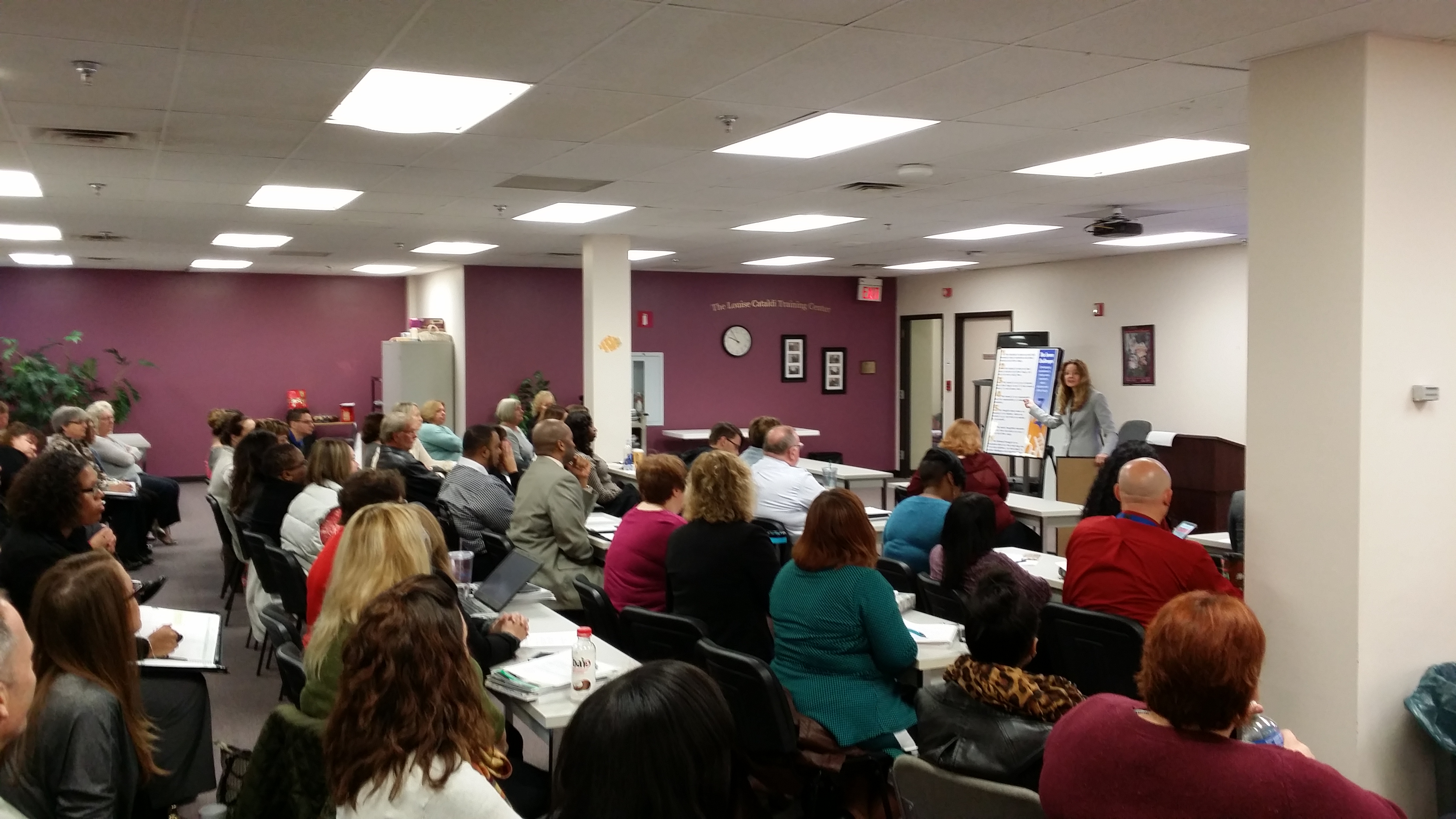
Cassandra Russell, national trainer for The Seven Challenges, presents

On Wednesday, October 22, 2014, Montgomery County Juvenile Court, South Community Inc., along with the support of the Ohio Department of Youth Services, hosted a community overview to kick off the expansion of much needed outpatient adolescent substance abuse and co-occurring treatment in the community! South Community, Inc., a private behavioral health group, and Montgomery County Juvenile Court collaborated to bring the program, The Seven Challenges, to the area.

Judge Nick Kuntz and Judge Anthony Capizzi commended Juvenile Court and South Community staff for their efforts and working together to bring evidence-based treatment options to the youth of Montgomery County. The Seven Challenges is an evidence-based model supported by the National Substance Abuse and Mental Health Services Administration, and is designed to motivate a decision and commitment to change among adolescents struggling with substance abuse.

Cassandra Russell, a national trainer for The Seven Challenges, provided an overview during the community kick off. The initial training and implementation of The Seven Challenges was funded through the Ohio Department of Youth Services. Continued funding is provided through the Office of Juvenile Justice and Delinquency Prevention Drug Court Enhancement grant until October 2017.

Reclaiming Futures Featured on the Office of National Drug Control Policy Blog

In recognition of National Substance Abuse Prevention Month, I had the honor to contribute to the Office of National Drug Control Policy’s blog. Citing our Reclaiming Futures site in Snohomish County, Washington, I shared why we at Reclaiming Futures believe community involvement is critical to improve mental health and substance abuse treatment, and ultimately build stronger communities around prevention.

Read the full blog post here and contribute your thoughts below.

In Juvenile Justice, Community Involvement is Key to Substance Abuse Prevention

Local artists in Snohomish County, Washington, are contributing their time, tools, and studio space to mentor teens recently involved in their community’s juvenile justice system. For eight weeks, the youth will learn art and photography skills, then produce artwork documenting their lives, families, and communities. Some of their efforts will be featured in local art venues or the local newspaper.

The teens are participants in Promising Arts in Recovery (PAIR), part of Snohomish County’s local Reclaiming Futures program. The goal of PAIR is to establish social and job skills by connecting local artists with at-risk teens who are involved in the juvenile justice system and may be undergoing treatment for substance use or mental health issues. Through programs like PAIR that offer workshops, internships, or job-shadowing opportunities, local professionals are not only helping these young people develop skills necessary to be active citizens, they are helping to rebuild a community around prevention.

Read the full story.

Speak Up! Share Your Story of Recovery from Addiction in an Important Video Contest

Do you know somebody who has an inspiring message of recovery to share? In a special 25th anniversary celebration of National Recovery Month, the Addiction Technology Transfer Center Network (ATTC) invites people in recovery from addiction or mental illness to share their stories in 60-second segments.

The “In My Own Words...” Video Message Contest aims to spread a message of hope by recognizing the accomplishments of recovering Americans, and those who have been instrumental in others’ recoveries. By collecting and sharing video stories of those who have succeeded in recovery, we can stifle the negative stigma of addiction and encourage others to speak out and ask for help.

The contest asks participants to address one of the following two prompts in a 60-second video message:
I’m speaking up about my recovery because…
I’m reaching out about my recovery to…
The “In My Own Words...” Video Message Contest, sponsored in conjunction with Faces & Voices of Recovery and Young People in Recovery, closes October 15, 2014.

Head to the ATTC Network for complete instructions on submitting a “In My Own Words...” video.

Remembering Reclaiming Futures' Passionate Leader, Linda Moffitt, 1953-2014

Linda MoffittReclaiming Futures recently lost a determined leader and friend. Linda Moffitt was project director and former juvenile justice fellow for Reclaiming Futures in Anchorage, and such a valuable driver of implementing Reclaiming Futures in Alaska. She is remembered dearly for her steadfast commitment and passion for her work, and her integrity and generosity that was carried throughout everything she did in life.

Upon hearing the news of her passing, friends and colleagues within the Reclaiming Futures community shared stories of Linda. Below is just a small sample of personal memories and impact that Linda had on so many of our lives:

Jim Carlton, Deputy Director, Reclaiming Futures National Program Office
“Though she retired from the Anchorage Division of Juvenile Justice about three years ago, she remained involved with Reclaiming Futures on the local level as their project director and as a coach on the national level. She was a dear person, a treasured resource for us here at the national program office, and she will be greatly missed by all of us here.”

Master William Hitchcock, Former judicial fellow, Anchorage, Alaska
“Linda Moffitt was a key collaborator in the development of the initial Anchorage proposal for Reclaiming Futures. She officially became a core partner in the national movement in 2003 when the probation fellowship was added. Throughout her career as a juvenile probation supervisor and on into retirement, she remained active in the ongoing development and expansion of the Reclaiming Futures model. Her leadership was not limited only to Anchorage, as she also played a key role on the national level as a coach and frequent participant in national fellowship conferences. Her influence led to the adoption of many of the core principles of Reclaiming Futures within the Alaska Division of Juvenile Justice, both in Anchorage and other offices throughout the state. Her commitment and passion for this work was unlimited. She will truly be missed by all of us.”

Tom Begich, Former community fellow and Project Director, Anchorage, Alaska
“Linda Moffitt was a true friend and a tireless advocate for youth, fairness, and a better world. She devoted her work life and, after her retirement, her personal life to trying to improve our juvenile justice system, provide greater opportunities and hope for young Alaskans and inspired all of us to give just a little bit more, try just a little bit harder, and see the world with grace, humor and joy. Knowing her well these past few years – her and Cande joining us for wine, enjoying great music and talking about our travel plans, our hopes and our aspirations was a joy I will cherish all my days. She will be very, very missed.”

Five Reasons to Contribute to Our Reader Survey

Screen Shot 2014-09-12 at 2.37.47 PMThe content on the Reclaiming Futures website and blog is intended to be informative, inspiring, and useful. Our Reader Survey was designed with you in mind to ensure we’re delivering what you want to see!

Here are the top five reasons you should share your feedback in our quick nine-question survey:

  1. To see the content you want—in the way you want it.

Your feedback will help us provide the most relevant content to your needs and interests. It will also help us reach you on the platforms you prefer, whether it’s through our newsletter, social media or the blog. Your feedback will shape the content we post going forward.

  1. Learn how to get involved.

The survey will help us gauge your interest in expanding the Reclaiming Futures model. It will allow you to share the areas in which you’d like to become involved, so we can make those easily available to you. If you’re interested in bringing Reclaiming Futures to your community, please contact Donna Wiench.

  1. Voice your opinion on what’s missing.

Who do you want to hear from in this sector? What topics would you like us to address more frequently? Tell us where to fill in the gaps!

  1. Share what piques your interest.

There are many aspects to the Reclaiming Futures model, which is implemented in 39 sites around the country. We want to hear which part of the model you'd like us to report on more!

  1. A chance to win $50 Amazon gift card!

If you complete the survey and provide your name and contact information, you’ll be entered into a drawing for a $50 Amazon card.

Our goal for this survey is to make sure we are best serving our audience. The results will help us tailor our content to what you want to see and where you want to see it.

Click here to get started. We appreciate your participation!

Webinar: Increasing Family Voice in the Juvenile Justice System

Why is a family voice significant in the juvenile justice system? I’m addressing this question in aOlivia September 19 webinar, along with Sandra Spencer of the National Federation of Families for Children's Mental Health.

We’ll discuss why family voice is crucial to the success of and support of youth involved in the juvenile justice system. As an advocate for substance abuse and mental health treatment for teens, Reclaiming Futures helps families connect to the community support resources needed for adolescents to stay clean and sober, and become a productive member of society.

Here are three takeaways you’ll gain from attending this webinar:

  • Understand and discuss why family and youth voice is critical
  • How to incorporate family voice into practice in the juvenile justice system
  • Learn how Reclaiming Futures sites have successfully integrated family voice

Details:

  • What: Webinar—Increasing Family Voice in the Juvenile Justice System
  • When: Friday, September 19, 3-4 p.m. EDT
  • Presenters: Sandra Spencer, Executive Director, National Federation of Families for Children's Mental Health; Susan Richardson, National Executive Director, Reclaiming Futures;
  • Register: Register here
  • Cost: Free
  • Contact: If you are unable to listen from your computer and need to call in, please email theinstitute@ssw.umaryland.edu

Celebrate Recovery Month: Tune Into the White House Special Event September 17

You’re invited to tune into a live broadcast of the Office of National Drug Control Policy (ONDCP) on September 17 at 2-4pm ET. This White House special event celebrates the 25th anniversary of the National Alcohol and Drug Addiction Recovery Month.

The event will celebrate the millions of individuals who have reclaimed their lives by overcoming addiction, and those who have persevered with them to aid their success.

You can help recognize these individuals at the event by tweeting questions and comments to @Botticelli44 using the hashtag #RecoveryatWH at any time prior to or during the event. Questions will be selected and posed to the panelists in recovery at the event.

Visit the live broadcast on September 17, or host a viewing party and register here.

With your help, we can take an important pause to highlight stories of recovery, uplift the negative stigma of addiction and take the next step toward a national commitment to recovery.

  • Who: You, your stakeholders, members and affiliates, and ONDCP
  • What: A ONDCP White House special event viewing party
  • Where: Your venue of choice + www.whitehouse.gov/live
  • When: September 17th | 2 – 4pm EST
  • Contact: Nataki MacMurray at RecoveryRSVP@ondcp.eop.gov or (202) 395-5510


Compassionate Canine Joins Snohomish County’s Juvenile Drug Treatment Court

Lucy and Judge Dingledy

Meet Lucy.

Lucy is one of two highly trained therapy dogs in the Prosecuting Attorney’s office. Lucy has several important roles.

She provides support and comfort to victims of trauma and abuse. Lucy helps break the ice when children are asked to talk about sexual and/or physical abuse. She is in the courtroom, hidden from jurors, sitting with children as they testify in court. Some families also request that Lucy sit with them as they watch the trials of people accused of killing their loved ones.

Lucy and  Juvenile Drug Court staff

Lucy is also the newest member of Snohomish County’s juvenile drug treatment court. She and her handler, Kathy Murray, attend staffing and are also present in the courtroom. Lucy lies near the bench on her blanket.  She provides support for the youth while in the courtroom.

She also helps the team. It’s tough on the team members when a youth has not succeeded in breaking free from their addiction.  Having Lucy there helps ease frustration and sadness and keeps the team focused on helping every youth in drug court have the best chance of success.

Kathy, Lucy’s handler, is also developing a program that will allow drug court youth who like animals to earn community service credit by working with Lucy one on one. As part of the program Kathy will provide a short training session to teach youth about giving commands and proper grooming. Not only will this teach the youth proper handling techniques, having Lucy follow their commands  will also provide them with a sense of accomplishment.

We’re very fortunate in Snohomish County to have a Prosecuting Attorney that cares so passionately about victims of trauma, their families and our drug courts.

We are also grateful to Canine Companions for Independence, a private non-profit organization that breeds and trains dogs, primarily for people with disabilities, for providing Lucy.


An Exciting Opportunity to Upgrade Your Juvenile Drug Court

Here’s an exciting opportunity to upgrade your juvenile drug court.

OJJDP

The Office of Juvenile Justice and Delinquency Prevention (OJJDP) recently released a solicitation for “OJJDP FY2014 Enhancements to Juvenile Drug Court”  which will provide up to eight juvenile drug courts with as much as $500,000 over three years.  The deadline for applications is July 23rd.  

The RFP states, “OJJDP will make awards to currently operating juvenile drug courts to enhance their capacity and the services they provide. A juvenile drug court provides comprehensive, developmentally appropriate, community-based services for youth who come in contact with the juvenile justice system due to alcohol or other drug use.”    The solicitation says OJJDP welcomes applications that involve two or more entities.

This grant is a great opportunity for communities interested in integrating Reclaiming Futures into their existing juvenile drug court.  As a partner to drug court applicants to this RFP, Reclaiming Futures could serve as a provider of technical assistance.  Reclaiming Futures has experience with data collection, the use of scientifically based screening and assessment procedures to identify youth in need of substance abuse and mental health services, staff training, family and community engagement, outcome monitoring and evaluation.

If your community is interested in applying for this grant and would like to learn how Reclaiming Futures fits into your proposal, contact Donna Wiench, Reclaiming Futures Strategic Partnership Director to learn more.

Helping Young People Get Treatment in Juvenile Justice and Beyond

Focal Point magazine, produced by the Pathways Research and Training Center (RTC) at Portland State University, recently published a collaborative article [PDF] between current and former Reclaiming Futures staff and partners examining how the Reclaiming Futures model saves money, reduces recidivism and improves abstinence from drug and alcohol abuse.
The article’s introduction is included below:

Why focus on the juvenile justice system? Despite the fact that most juvenile justice-involved young people are not being treated for substance abuse and mental health needs, the juvenile justice system is still the single largest referral source for adolescent treatment and this system is where young people in trouble often first come to our attention. Young people involved in the juvenile justice system often are challenged with substance use issues.
Nationally, about half of young people in the juvenile justice system have drug related problems. In fact, four of five young people in the juvenile justice system are under the influence of alcohol or drugs while breaking the law; test positive for drugs; are arrested for committing an alcohol or drug offense; admit having substance abuse and addiction problems; or share some combination of these characteristics.
Additionally, many young people in the juvenile justice system have a co-occurring disorder (both substance abuse and mental health). Yet in spite of research that shows treatment helps reduce recidivism and saves money, juvenile courts usually are not set up to detect and treat substance abuse or to provide mental health and other important services.
Instead, most of the young people in the juvenile justice system who need treatment for drugs, alcohol, and mental health problems are not getting it. Fewer than one in twelve young people who need such supports actually receive treatment of any kind. For those who receive treatment, less than half are retained for 90 days as recommended by research. Many communities are not using evidence-based treatments that have been tested in the field for many years.
Young people need different care than adults: care that addresses adolescent development and brain science, and that utilizes support from families and community. Too many juvenile courts mirror a more punitive approach appropriate to adult criminal court rather than the rehabilitative civil court envisioned when the juvenile court was first established in the late nineteeth century.

The good news is that there's already a solution to the issues outlined above: Reclaiming Futures! We know from our evaluations that the Reclaiming Futures model helps teens overcome the cycle of drugs, alcohol and crime by addressing their co-occurring needs. Again from the article, "The Reclaiming Futures JTDC model has potential to increase drug and alcohol abstinence, reduce young people’s illegal activity, and reduce the cost of crime to society." 
Learn more about the Reclaiming Futures model here >>
For the rest of the article, jump to page 18 in the linked PDF for our Reclaiming Futures article, or scroll through the whole magazine for more great articles about co-occurring substance abuse and mental health issues facing teens and young adults.

Time to Act: Investing in the Health of Our Children and Communities

In 2008, the Robert Wood Johnson Foundation (RWJF) convened the Commission to Build a Healthier America to find better ways to improve the health of our nation.
In their search for solutions, the Commissioners found that where we live, learn, work, and play profoundly influences our health.
The new recommendations, released January 13, are aimed at improving health now and for generations to come, and specifically highlight the need to:

  • Prioritize investments in America's youngest children.
  • Encourage leaders in different sectors to work together to create communities where healthy decisions are possible, with a particular emphasis on community development.
  • Challenge health professionals and health care institutions to expand their focus from treating illness to helping people live healthy lives.

Reclaiming Futures supports RWJF's effort and continues to unite juvenile courts, probation, mental health treatment, adolescent substance abuse treatment, and the community to reclaim youth.
We'd love to hear from you. How can the Commission's recommendations change the way communities invest in young people? Please share your suggestions in the comments section below. 

Demonstrating Success: How Ventura County Won $600,000 Grant


One of the greatest pleasures of working with Reclaiming Futures is getting to know juvenile justice leaders around the country—and celebrating their successes.
A great example is the team in Ventura County, California, who recently received a $600,000 two-year, Second Chance Act grant from the Office of Juvenile Justice and Delinquency Prevention (OJJDP) to serve young people with co-occurring substance abuse and mental health disorders. 
Because Ventura County Reclaiming Futures has demonstrated success—and funders like to invest in promising practices—they continue to attract partners to help teens overcome the cycle of drugs, alcohol and crime.
Keep up the great work, Ventura County!