Juvenile Treatment Drug Court

Girls and Opioids: Vulnerabilities & Opportunities

In two separate blog posts in 2016, we discussed opioid use rates and substance use issues among adolescent girls involved with juvenile justice. In July 2017, the United States Department of Health and Human Services, Office on Women’s Health (OWH) released a report on opioid use, misuse, and overdose in women. The report provides information on the gender-specific issues and gaps in knowledge regarding females with substance use concerns/disorders. The report discusses the differences among females and males regarding the progression of substance use, the biological, social, and cultural issues (e.g., pain; relationships; family/parenting; trauma, determinants of health), effective treatments and barriers to implementation, and areas for further research. As it relates to adolescent girls (ages 12-17 years old), the report indicates they are more likely to use and become dependent on non-medical uses of prescription drugs as compared to adolescent boys. Access to prescription drugs can come from a home medicine cabinet and may help relieve mental health or physical pain symptoms and/or be part of their peer culture.


2017 Report on Lesbian, Gay, Bisexual, Questioning, Gender Nonconforming and Transgender (LGBQ/GNCT) Youth Involved with Juvenile Justice

Since joining Reclaiming Futures, I have listened to the open meetings of the Federal Advisory Committee on Juvenile Justice (FACJJ). Supported by the Office of Juvenile Justice and Delinquency Prevention (OJJDP), FACJJ (pronounced FAC Jay) members are individuals appointed to State Advisory Groups. Created in 2002, FACJJ members are responsible for having knowledge of the Juvenile Justice and Delinquency Prevention Act (JJDPA) and to encourage state compliance with the four core protections:

Juvenile Drug Treatment Court Guidelines

As many of you know, in 2016 the Office of Juvenile Justice and Delinquency Prevention (OJJDP) released the Juvenile Drug Treatment Court Guidelines (JDTC). The purpose for developing the Guidelines was to organize the most effective JDTC implementation components based on the best available research. Building on the 2003 Juvenile Drug Courts: Strategies in Practice (JDC: SIP), this systematic and thorough review developed seven objectives, each with corresponding guidelines statements, and supporting information.

Compassionate Canine Joins Snohomish County’s Juvenile Drug Treatment Court

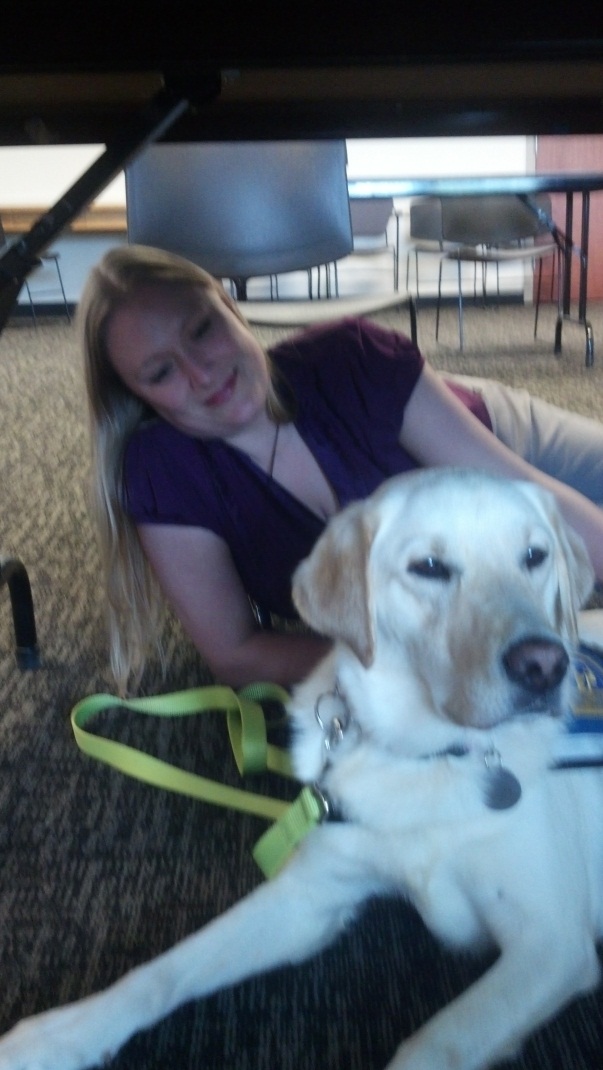
Lucy and Judge Dingledy

Meet Lucy.

Lucy is one of two highly trained therapy dogs in the Prosecuting Attorney’s office. Lucy has several important roles.

She provides support and comfort to victims of trauma and abuse. Lucy helps break the ice when children are asked to talk about sexual and/or physical abuse. She is in the courtroom, hidden from jurors, sitting with children as they testify in court. Some families also request that Lucy sit with them as they watch the trials of people accused of killing their loved ones.

Lucy and  Juvenile Drug Court staff

Lucy is also the newest member of Snohomish County’s juvenile drug treatment court. She and her handler, Kathy Murray, attend staffing and are also present in the courtroom. Lucy lies near the bench on her blanket.  She provides support for the youth while in the courtroom.

She also helps the team. It’s tough on the team members when a youth has not succeeded in breaking free from their addiction.  Having Lucy there helps ease frustration and sadness and keeps the team focused on helping every youth in drug court have the best chance of success.

Kathy, Lucy’s handler, is also developing a program that will allow drug court youth who like animals to earn community service credit by working with Lucy one on one. As part of the program Kathy will provide a short training session to teach youth about giving commands and proper grooming. Not only will this teach the youth proper handling techniques, having Lucy follow their commands  will also provide them with a sense of accomplishment.

We’re very fortunate in Snohomish County to have a Prosecuting Attorney that cares so passionately about victims of trauma, their families and our drug courts.

We are also grateful to Canine Companions for Independence, a private non-profit organization that breeds and trains dogs, primarily for people with disabilities, for providing Lucy.


An Exciting Opportunity to Upgrade Your Juvenile Drug Court

Here’s an exciting opportunity to upgrade your juvenile drug court.

OJJDP

The Office of Juvenile Justice and Delinquency Prevention (OJJDP) recently released a solicitation for “OJJDP FY2014 Enhancements to Juvenile Drug Court”  which will provide up to eight juvenile drug courts with as much as $500,000 over three years.  The deadline for applications is July 23rd.  

The RFP states, “OJJDP will make awards to currently operating juvenile drug courts to enhance their capacity and the services they provide. A juvenile drug court provides comprehensive, developmentally appropriate, community-based services for youth who come in contact with the juvenile justice system due to alcohol or other drug use.”    The solicitation says OJJDP welcomes applications that involve two or more entities.

This grant is a great opportunity for communities interested in integrating Reclaiming Futures into their existing juvenile drug court.  As a partner to drug court applicants to this RFP, Reclaiming Futures could serve as a provider of technical assistance.  Reclaiming Futures has experience with data collection, the use of scientifically based screening and assessment procedures to identify youth in need of substance abuse and mental health services, staff training, family and community engagement, outcome monitoring and evaluation.

If your community is interested in applying for this grant and would like to learn how Reclaiming Futures fits into your proposal, contact Donna Wiench, Reclaiming Futures Strategic Partnership Director to learn more.

Forsyth County’s Juvenile Drug-Treatment Court Celebrates First Graduates

Forsyth County’s juvenile drug-treatment court celebrated its first three graduates in April. The Forsyth County juvenile drug-treatment court started in January 2013 and is geared toward nonviolent youths ages 12 to 16 who have substance abuse problems and have been sentenced to probation in juvenile court.
The goal of the program is to give participants a chance at a better life, ultimately reducing recidivism. Juanita Campbell, grandmother of one of the graduates, celebrated the program for this mission:
“I thank God for this program because I don’t want to give him to the streets,” Campbell said. “I don’t want to bury him. I don’t want him to spend 30 years in prison.”
Participants are required to remain in school, perform 25 hours of community service, and are subject to random drug testing. It typically takes nine to 15 months to graduate from the program, with assessments every 90 days to monitor the teens’ progress.
Forsyth County Court works with the local Reclaiming Futures to carry out assessments. Jemi Sneed, project director of Reclaiming Futures, said all participants are assessed to determine what type of substance abuse and other treatment they need, and then directed to the most appropriate treatment.

Drug Court Pioneer, Judge John Schwartz, Celebrates Last Graduation Ceremony

Judge John Schwartz founded the first Drug Court of New York in Rochester in 1995—at a time when the idea was highly controversial. On Friday, Oct. 25, Judge Schwartz presided over his last graduation as he prepares for well-deserved retirement.
Judge John Schwartz started his career in 1983 as a Rochester City Court Judge and has accomplished a tremendous amount for the New York Drug Courts. The Honorable Judge Schwartz has received several prestigious awards for his contributions to the Courts and his positive impact on the community throughout his career.
His last graduation class was monumentally successful; 85 newly clean and sober participants graduated—the largest group in the court’s 16-year history!
“It’s our largest graduating class ever and it’s been a great day,” said Judge Schwartz. “We’ve had a lot of success stories at this court and I’m very proud of them.”
It was the 46th graduation ceremony at the Hall of Justice in the Rochester City Court, and more than 200 people from across New York attended.
One particular special guest, Beth Coombs—a graduate in Judge Schwartz’s first class—traveled from California to speak on behalf of his groundbreaking work in the Drug Court field. “He put his reputation on the line so we could have a new way of life,” said Coombs, who currently works for a nonprofit association.
Another speaker on behalf of Judge Schwartz was West Huddleston, CEO of National Association of Drug Court Professionals, who praised Schwartz’s achievements within the state of New York and the Drug Court.
“[He] is an icon in the Drug Court profession who helped pave the way for others. As a visionary, he understood the value, the need and the potential of Drug Courts, and he put in the hard work needed to make the dream of Drug Courts a reality,” said Huddleston. “The domino effect Judge Schwartz has had on the Rochester community, the state of New York and the Drug Court profession is immeasurable.”

Montgomery County Juvenile Court Celebrates 15 Drug Court Graduates

In celebration of National Drug Court Month, Montgomery County Juvenile Court held a graduation ceremony celebrating youth who have successfully overcome drug and alcohol abuse.
National Drug Court Month is coordinated on a National level by the National Association of Drug Court Professionals (NADCP). This year, Drug Courts throughout the nation are celebrating National Drug Court Month with the theme ‘Drug Courts: Where Accountability Meets Compassion.’ This uplifting commencement ceremony is evidence of the tremendous impact the Montgomery County Juvenile Drug Court has had on our community and will send a powerful message that Drug Courts are a proven budget solution that saves lives and dollars.
Like the other 2,700 operational Drug Courts in the United States, the Montgomery County Juvenile Drug Court is a judicially-supervised court docket that reduces correctional costs, protects community safety, and improves public welfare. In Drug Court, seriously drug-addicted individuals remain in treatment while under close supervision. Drug Court participants must meet their obligation to themselves, their families, and society. To ensure accountability, they are regularly and randomly tested for drug use, required to appear frequently in court for the judge to review their progress, rewarded for doing well and sanctioned for not living up to their obligations. Research continues to show that Drug Courts work better than jail or prison, better than probation, and better than treatment alone.
Fifteen young men and women were among this year’s graduates. The ceremony marked their completion of an intensive program of comprehensive drug treatment, case management, mandatory drug testing, community supervision and incentives and sanctions to encourage appropriate behavior.

Plan to Celebrate National Drug Court Month in May

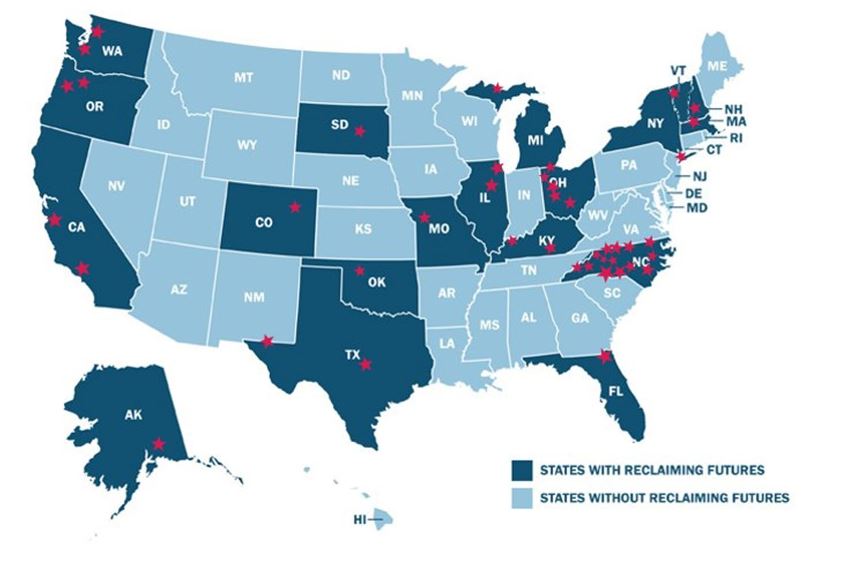
Reclaiming Futures works in 37 communities across the country to break the cycle of drugs, alcohol and crime. In about one-third of those sites, Reclaiming Futures partners with drug courts, which, according to years of research, work better than jail, prison, probation or treatment alone to significantly reduce drug use and crime.
To celebrate this, and the many lives that have been saved, please join us, and plan ahead for National Drug Court Month in May.
Here are some ideas for celebrating in your community (adapted from the National Association for Drug Court Professionals):

  • Hold a commencement ceremony to recognize the accomplishments of participants.
  • Schedule a meeting with your members of congress while they are home for Constituent Work Week, May 1-3 and 28-31. Have your Drug Court judge and graduate attend the meetings to educate policymakers.
  • Organize a community clean up. Clean a park, street, highway or school. Invite all treatment, mental health, court, law enforcement and probation staff to join in.
  • Start a local donation drive.

SAMHSA: Juvenile Drug Treatment Courts Break Cycle of Drugs, Alcohol and Crime

Across the country, juvenile treatment drug courts (JTDC) are helping teens achieve better outcomes by focusing on treatment and family engagement. JTDCs treat teens for both substance abuse problems and mental health issues, as needed. As David Morrissette, senior program manager at SAMHSA, explained to SAMHSA News, "up to 70 percent of youth in the juvenile justice system have mental health disorders and more than 60 percent of those also have a substance use disorder."
The latest issue of SAMHSA News highlights a number of successful drug court programs, including Reclaiming Futures. From the article [emphasis mine]:

In a 2012 evaluation [ppt] examining data from 1,934 young people participating in drug courts at 17 CSAT grantee sites, evaluators found that participants saw a 26 percent increase in the number of days they abstained from alcohol and other drugs between intake and a 1-year follow-up. Participants' scores on a scale measuring emotional problems and difficulties with self-control declined by 16 percent. The average number of crimes reported dropped by half.
According to the evaluation, a more intensive approach to juvenile treatment drug courts called Reclaiming Futures reached youth with more severe problems, provided more services, and did an even better job of increasing abstinence, reducing emotional problems, and reducing criminal behavior.
...
"There are six stages in the [Reclaiming Futures] model," said SAMHSA Project Officer Holly Rogers, M.A. "These include screening and assessing young people to identify alcohol or substance use problems, coordinating services across agencies, helping kids and families make an initial contact with services, getting them actively engaged in services, and transitioning them out of services and into long-term supports, such as helping relationships and community resources."

Pages