Family Involvement

Girls and Opioids: Vulnerabilities & Opportunities

In two separate blog posts in 2016, we discussed opioid use rates and substance use issues among adolescent girls involved with juvenile justice. In July 2017, the United States Department of Health and Human Services, Office on Women’s Health (OWH) released a report on opioid use, misuse, and overdose in women. The report provides information on the gender-specific issues and gaps in knowledge regarding females with substance use concerns/disorders. The report discusses the differences among females and males regarding the progression of substance use, the biological, social, and cultural issues (e.g., pain; relationships; family/parenting; trauma, determinants of health), effective treatments and barriers to implementation, and areas for further research. As it relates to adolescent girls (ages 12-17 years old), the report indicates they are more likely to use and become dependent on non-medical uses of prescription drugs as compared to adolescent boys. Access to prescription drugs can come from a home medicine cabinet and may help relieve mental health or physical pain symptoms and/or be part of their peer culture.

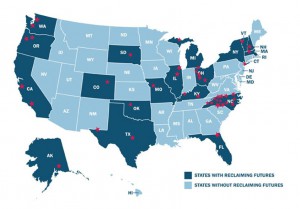
Year 2 Update! Reclaiming Futures' Version of Screening, Brief Intervention, and Referral to Treatment (SBIRT)

As many of you know, Reclaiming Futures was awarded a Conrad N. Hilton Foundation grant in September 2014. The purpose of this grant is to develop, pilot test, evaluate, and disseminate a new version of SBIRT for youth at risk for deeper involvement with the juvenile justice system. As a first step, Reclaiming Futures issued a request for proposals and awarded five sites to help us in the endeavor. The sites selected, through a competitive process, were:

  • Chittenden County, Vermont
  • King County, Washington
  • Mecklenburg County, North Carolina
  • Nassau County, New York
  • Washington County, Oregon

Talking About Addiction

On June 1, 2016, our Reclaiming Futures national executive director Evan Elkin spoke at Red Emma's in Baltimore for Open Society Institute-Baltimore's second event in their "Talking About Addiction" series. Elkin was accompanied on the panel by Dr. Hoover Adger from Johns Hopkins Children's Center and by Carin Callan Miller, who founded Save Our Children Peer Family Support. The conversation was moderated by Scott Nolen, director of OSI-Baltimore's Drug Addiction Treatment Program. A full room of community members joined them for the evening, including families affected by adolescent addiction.

Youth, Addiction and the Juvenile Justice System

Whereas the first "Talking About Addiction" event explored alternative law enforcement approaches to addiction, this event focused on youth, addiction, and the juvenile justice system. Despite public acknowledgment of the failures of the "War on Drugs," and an increased understanding of addiction as a public health issue rather than a criminal justice issue, OSI-Baltimore recognizes that research and policy around adolescent addiction are slow to reach the mainstream. Indeed, during the discussion, some attendees expressed frustration with how long addiction treatment reform is taking; OSI moderator Nolen suggested reassurance that the addiction paradigm is finally shifting.

Senate Judiciary Approves Criminal Justice Bill with Juvenile Provisions; News Roundup

Every week Reclaiming Futures rounds up the latest news on juvenile justice reform, adolescent substance use treatment, and teen mental health. 
Senate Judiciary Approves Criminal Justice Bill with Juvenile Provisions (Juvenile Justice Information Exchange)
Yesterday the Sentencing Reform and Corrections Act of 2015 cleared the Senate Judiciary Committee. The bill would reform policies for youth in prison, as well as help with the process of re-entry into the community.

NASADAD Releases a State Adolescent Substance Use Disorder Treatment and Recovery Practice Guide

The National Association of State Alcohol and Drug Abuse Directors, Inc. (NASADAD) “…purpose is to foster and support the development of effective alcohol and other drug abuse prevention and treatment programs throughout every State.” NASADAD has recently achieved this purpose by the development of the State Adolescent Substance Use Disorder Treatment and Recovery Practice Guide (see link below).

Recapping the 2014 Georgetown Training Institutes

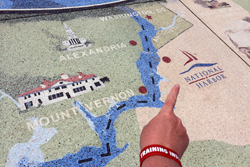
National HarborLast week I traveled to National Harbor, Maryland to attend the 2014 Georgetown University Training Institutes on improving services and supports for children, adolescents, and young adults with or at risk for mental health challenges and their families, along with Reclaiming Futures Fellowship Program Manager, Christa Myers.

This year the conference theme was, “Improving Children’s Mental Health Care in an Era of Change, Challenge and Innovation: The Role of the System of Care Approach” with an estimated attendance of 2,000. Below are my key takeaways.

The Youth Movement Has Arrived

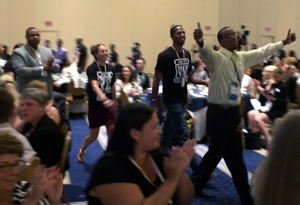
Youth MOVE arrivesThere was a great youth track at the conference – and more often than not you could hear fellow attendees in the hallways saying that these sessions were better than any others they had attended.

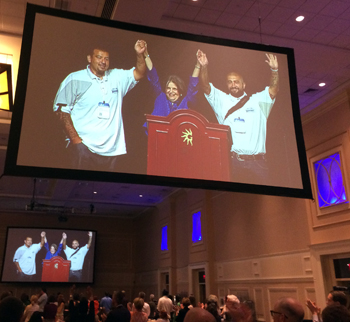
Youth MOVE Rockstar AwardsBoth Youth M.O.V.E. National and local Youth M.O.V.E. chapters were well represented, along with many other youth organizations from around the country.  On Thursday night the 2014 recipients of the Youth MOVE Rockstar Awards were announced. The recipients were:

  • Niketa Currie, Youth M.O.V.E. North Carolina was named the 2014 Tricialouise Gurley-Millard Youth Advocate
  • Dr. JoAnne Malloy,  Institute On Disabilties was named the 2014 Dr. Gary M. Blau Professional of the Year
  • The Kentucky Partnership for Families and Children was named the 2014 Youth Guided Organizational Rockstar
  • Bruce Brumfield, Center for Community Alternatives was named the 2014 Marlene Matarese Advocate for Youth was named the 2014
  • Youth M.O.V.E. Miami was named the 2014 National Chapter
  • Gregory Foster was given the first ever Honorary Rockstar award for his continued dedication to youth and young adults who struggle with poverty and behavioral health needs.

And a special shout out to Youth M.O.V.E. Saginaw for contributing the soundtrack.


The Power of Storytelling
Homeboy Industries at Georgetown InstitutesStorytelling is critical for organizations dealing with complex issues. The Power of Story Telling: Digital Voices in a Digital Age was a special presentation on the first day of the conference. This session showcased first person narrative video stories by youth from Washington state’s Youth N Action.  

Report Finds Family Visits Improve Behavior and School Performance of Incarcerated Teens

A report from the Vera Institute of Justice, Ohio Department of Youth Services and the Public Welfare Foundation underscores the importance of family involvement for incarcerated youth. The Families as Partners: Supporting Youth Reentry Project’s findings reveal the positive correlation between family visitation and behavior and school performance, and suggest juvenile correctional facilities should change their visitation policies to promote more frequent visitation with families.
In the study, teens who were never visited earned the lowest GPA scores and had three times as many behavior incidents as those who saw their families at least once a week. Conversely, youth who had regular family visits experienced the lowest levels of behavioral incidents and earned the highest GPAs.
Here are some highlights from the report:

  • Youth who were visited regularly committed an average of four behavioral incidents per month, compared to six among those visited infrequently and 14 among those who were never visited.
  • Youth who had never received a visit exhibited the highest rates of behavioral incidents.
  • Average GPAs for youth who never had a visitor was 80.4, compared to 82 for those who had visits infrequently and 85 for youth who had frequent visits.

Find the full report from the Families as Partners: Supporting Youth Reentry Project.

How to Help Teens in Detention During the Holidays

Editor's Note: This post was originally published in 2010, but we thought you might find it useful.juvenile-justice-system_scraggly-tree-with-one-christmas-bulb-institutional-setting
We know that teens in the juvenile justice system generally have better outcomes when they're connected with their families while they're detained or incarcerated. During the holidays, their feelings of isolation and despair are magnified (and their family members often feel the same way). 
It can make all the difference to have someone remember them during the holidays, and it can be a great opportunity to partner with community organizations. 
Don't know what to do?  Then check out this excellent Holiday Toolkit from the Campaign for Youth Justice. (Be patient - I find the PDF can take a while to load.) It can help you plan:

  • a party or special event at the detention facility (or wherever the youth are locked up);
  • a holiday gift-giving event;
  • a walk-through of the facility by legislators or local policy makers; or
  • a holiday-card campaign.

It's even got sample language for cards, invitations, and a media advisory.  Try it -- and let us know how it goes!

Family Visitation is More than Just a Nice Perk

After years of research, Vera’s Family Justice Program has implemented new programs which will contribute to easier access for family members seeking out their incarcerated loved ones. Considering youth school performance and behavior are both directly affected by family visitation, the Ohio Department of Youth Services (DYS) partnered with the Vera’s Family Justice Program on the Families as Partners project to promote support from the family members of incarcerated juveniles.
Through research gathered February 2010 through March 2013, the Families as Partners project discovered incarcerated adults and juveniles with a strong tie to loved ones progress better in prison and pose less of a threat once they are released. This family relationship and contact is described as critical to the accomplishments of youth in juvenile justice facilities.
Despite the lasting benefits family visitation has on incarcerated juveniles and the community, families often face obstacles when visiting their loved ones. Thus, the research gathered sought to support staff-to-family encouragement on emotional and material support, scheduled visits and overall involvement in treatment and reentry plans.

Missouri Employs Families to Combat Delinquency

The juvenile justice system, in a sense, functions to replace a core family function: discipline of a child. While this is an important governmental role in some cases, it is necessary to ensure that families are not unnecessarily displaced, and in fact included in juvenile justice to the highest degree possible.
This is why family based juvenile justice programs often are very successful. Such programs return parents to their natural role of disciplinarian, and ensure that parents and youths are able to move forward with as little state involvement as possible.
Jackson County, Missouri, has adopted this precept with their Family Court program. The Family Court uses Parenting with Love and Limits theories, which seek to arm parents with the tools they need to discipline and control youths at home, and avoid placement in a secure facility.

Pages