Community Engagement

“Read All About It” - Research Findings Published!

Reasons why I am proud to write this blog post...

Reason 1: My former colleagues (and friends) at The University of Arizona, Southwest Institute for Research on Women (UA SIROW) (UA SIROW) have been leading the efforts on the national evaluation of Juvenile Drug Courts and Juvenile Drug Courts blended with Reclaiming Futures (JDC/RF).  UA SIROW collaborated with Chestnut Health Systems and Carnevale Associates, LLC to implement a comprehensive evaluation that included data from Juvenile Drug Courts, Juvenile Drugs Courts blended with Reclaiming Futures, and non-justice related intensive adolescent outpatient programs. The purpose was to examine processes, outcomes, and costs.

Talking About Addiction

On June 1, 2016, our Reclaiming Futures national executive director Evan Elkin spoke at Red Emma's in Baltimore for Open Society Institute-Baltimore's second event in their "Talking About Addiction" series. Elkin was accompanied on the panel by Dr. Hoover Adger from Johns Hopkins Children's Center and by Carin Callan Miller, who founded Save Our Children Peer Family Support. The conversation was moderated by Scott Nolen, director of OSI-Baltimore's Drug Addiction Treatment Program. A full room of community members joined them for the evening, including families affected by adolescent addiction.

Youth, Addiction and the Juvenile Justice System

Whereas the first "Talking About Addiction" event explored alternative law enforcement approaches to addiction, this event focused on youth, addiction, and the juvenile justice system. Despite public acknowledgment of the failures of the "War on Drugs," and an increased understanding of addiction as a public health issue rather than a criminal justice issue, OSI-Baltimore recognizes that research and policy around adolescent addiction are slow to reach the mainstream. Indeed, during the discussion, some attendees expressed frustration with how long addiction treatment reform is taking; OSI moderator Nolen suggested reassurance that the addiction paradigm is finally shifting.

What Campaign Zero’s Policy Recommendations Mean for Our Youth

bodyworn-794101_1280 (1)

Last week, Campaign Zero—an initiative started by prominent members of the Black Lives Matter movement—released a set of policy solutions to curb police violence and discrimination in the wake of several high-profile police killings, including that of 18-year-old Michael Brown in Ferguson, Mo., on August 9, 2014.

Here we review a few of Campaign Zero’s key recommendations that would have a notable impact on minors, which is our focus here at Reclaiming Futures.

The Solution to a 27.47 Ton Problem

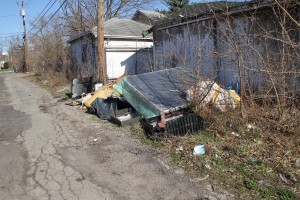
April in Dayton, Ohio generally means the winIMG_4366ter weather is starting to break. Snow showers and subzero temperatures are replaced with rain showers and flowers. For some neighborhoods in Dayton, Ohio the break in the weather brings light to a major issue. The issue of illegal dumping is highly visible once the piles of snow have melted away. In some instances, neighborhoods have been left with tons of trash and debris.  For several blocks certain alleyways can be found with couches, mattress, appliances and construction waste.

On April 1, 2015 Montgomery County Juvenile Court hosted its fourth annual community cleanup in the Fairview Neighborhood. This was a community effort, with multiple partners coming together to improve the appearance of one of our city’s neighborhoods.

[VIDEO] Community-Based Alternatives for Kids in Trouble with the Law

A new video from JJIE's Juvenile Justice Resource Hub explains how community-based alternatives can be more cost-effective and have better outcomes for teens than incarceration. Via the video:

All kids make mistakes; some get in trouble with the law. Instead of having a chance to learn from their actions, though, they're often sent to costly, dangerous facilities that make them more likely to commit new crimes.
What else can we do? Plenty. Many cost-effective program options, known as "community-based alternatives," have already been developed and tested that serve youth safely in the community instead of incarcerating them in jail-like facilities. Many alternatives have also been developed to divert youth from almost any point in the juvenile justice system.

[VIDEO] Vikram Patel: Mental Health for All by Involving All

An estimated one in five adolescents worldwide struggle with a mental illness such as depression, a panic disorder, an anxiety disorder or obsessive compulsive disorder. In the United States only half of those individuals obtain the help they need, yet in developing nations, far fewer are lucky enough to receive the appropriate care. In this TED video, Vikram Patel explains an approach to end the worldwide lack of treatment by training community members to care for others, similar to the Reclaiming Futures mission of community based care to help young people overcome drugs, alcohol and crime. Watch the video in full below:
 

Applications Available for CJJR's 2013 Juvenile Justice Certificate Programs

The Center for Juvenile Justice Reform at Georgetown University‘s Public Policy Institute is proud to announce its 2013 Certificate Programs. In addition to the weeklong certificate programs in multi-systems integration, CJJR now offers shorter certificate programs of intensive study in information sharing, youth in custody, and reducing racial and ethnic disparities in juvenile justice.
CJJR programs target public and private sector leaders working in the juvenile justice, child welfare, judiciary, behavioral health, education and other systems that serve youth in, or at-risk of becoming involved in, the juvenile justice system. 
Certificate programs at CJJR take a multi-systems and multi-disciplinary approach to policies, programs, and practices that improve outcomes for this population -- including a focus on "crossover youth"--i.e. youth known to both the child welfare and juvenile justice systems.

A Community Approach to Juvenile Justice

This Fall, the Adler School Institute on Public Safety and Social Justice (IPSSJ) and its partner organizations with the Cook County Juvenile Justice Task Force published a concept paper (PDF download) outlining community-based, trauma-informed, restorative solutions to youth crime and conflict in Cook County, Illinois. The report provides guiding thoughts on how the juvenile justice system can better support young people while making communities safer. It also recommends alternatives to existing centralized juvenile detention approaches in Cook County.
The Adler School IPSSJ paper reports that the majority of juvenile justice dollars are spent in only a few zip codes. By using community approaches to juvenile justice, the Adler School argues that the county could get a much higher return on investment, along with lowering the risk currently posed by teen crime. Via the report:

...if the county does not reinvest these dollars in the communities of greatest need, it is asking residents of those areas to assume substantial additional risks to their safety without funding the types of programs and initiatives that could effectively manage those risks. This is a very real danger. As we all labor to design the best possible future for juvenile justice in Cook County, we would like your help keeping the above ideas and concerns at the forefront of the process. We know fundamental change will take years to responsibly develop; yet the time to begin the work is now.

Deadline Approaching for Information Sharing Certificate Program

The Center for Juvenile Justice Reform and the Juvenile Law Center are hosting the second Information Sharing Certificate Program in March of 2013.
The Informaion Sharing Certificate Program is designed to enable leaders in the juvenile justice, child welfare, education, behavioral health and other child serving fields to overcome information sharing challenges that prevent the communication and coordination that is necessary to more fully serve youth known across multiple systems of care. Upon completion of the intensive three-day learning experience, participants apply the knowledge they gain through the development and implementation of a Capstone Project—an action agenda they undertake in their organization/community to initiate or enhance information sharing efforts. To accelerate these efforts, it is strongly encouraged that those interested in attending form a team from their jurisdiction to apply to the program.
Applications are due December 20, 2012

After Treatment: The Role of Community-Based Partnerships in Substance Abuse Recovery

In honor of Recovery Month, I'm sharing the Road to Recovery's latest video on the importance of community-based organizations. Reclaiming Futures is a huge believer in connecting young people with long-term community supports so that teens don't find themselves in the same situations that got them in trouble. 

From the Road to Recovery:

Pages